Why America Gets Africa Wrong
The Trump administration boasts that it has upended the United States’ relationship with Africa. In its view, the U.S. government has historically promoted a liberal agenda on the continent through aid, democracy promotion, and human rights advocacy; President Donald Trump has pivoted to a proudly transactional approach that favors U.S. security and economic interests. As Nick Checker, the senior State Department official responsible for African affairs, declared in a speech on March 19, “The United States is resetting its relationship with Africa based on mutually beneficial partnerships rather than aid, dependency, and spreading divisive ideology. . . . It’s a radical but necessary corrective to the reckless pursuit of liberal hegemony over the last 30 years.”
Read more Extreme Weather Will Upend U.S.-China Competition
Critics and supporters alike have bought the Trump administration’s claim. “Trump’s ‘America First’ approach is reshaping how the United States engages with Africa,” a Tony Blair Institute report declared in February 2025. “Under the new administration, U.S.-Africa relations will be explicitly pursued within the context of U.S. interests.” In December, The Guardian concluded that Washington’s Africa strategy indeed constituted a “consequential pivot” in which “human rights and democracy promotion have been de-emphasized.”
But the truth is that the difference between Trump’s approach and that of previous U.S. administrations is a matter of degree, not kind. Trump’s wholesale demolition of the U.S. Agency for International Development, restrictions on African visa seekers, punitive tariffs, courting of autocrats, and freewheeling, quid-pro-quo dealmaking are more nakedly transactional than the policies his predecessors pursued. But alongside public health interventions and democracy promotion, Washington has long pursued arrangements with African authoritarians and sought more informal kinds of deals on the continent than it pursued elsewhere. For many decades, U.S. Africa policy has been disjointed. And over the past 20 years, it has become even more so, as recent African migrants to the United States have become more influential in policymaking and have pushed for a country-by-country, rather than a continent-wide, approach.
Trump—who is feuding with South Africa and intervening in Nigeria for ideological reasons while taking a transactional approach in the Democratic Republic of the Congo—is continuing this trend. Indeed, in some respects, Trump’s haphazard global foreign policy resembles Washington’s traditional approach to Africa—so much so that what was once a distinct Africa strategy appears to have become the American approach to everywhere.
That historic U.S. approach has long confounded analysts. Most accounts of U.S.-African relations presume that African countries are essentially powerless, ripe for manipulation and exploitation by larger powers. But if that is so, why have U.S. policies often failed to achieve their objectives even as they benefit African elites? For instance, since 2007, the United States has supported Ugandan President Yoweri Museveni largely on the premise that Uganda would take a leading role in dismantling al-Shabab, the militant group, in Somalia—a key objective of the U.S. “war on terror.” Two decades later, al-Shabab remains lethal and deeply entrenched in Somalia. Uganda’s military, meanwhile, has benefited from billions of dollars in American support, and Museveni has faced minimal criticism from Washington even as he has rolled back his country’s democratic progress and ruthlessly crushed his opponents.
A new book by Sobukwe Odinga, an international relations and African American studies scholar at the University of California, Los Angeles, offers an answer: African leaders have frequently and successfully pushed the United States to implement policies that go against both its proclaimed values and its interests. And Black Americans—primarily the descendants of enslaved people, not recent immigrants from Africa—have had an unusually large and personal influence on Africa policy. They have lost influence in recent years, especially under Trump. But Washington’s piecemeal approach persists, as does the White House’s vulnerability to exploitation by authoritarians. Although the factors driving U.S. policy in Africa may be changing, the outcomes have changed less. Individuals and small lobbies still exert an outsize influence on policy, and important briefs and deals are handed to relatively marginal figures. And the United States still has an incoherent mix of ideological and transactional approaches to different countries and lacks a consistently applied continental strategy.
BLACK POWER PARADOX
Odinga positions Washington’s Africa policy as the product of negotiations between three sets of actors—the U.S. government, Black American foreign policy advocates inside and outside government, and African heads of state. And he suggests that the United States has often bent to African interests, not vice versa. Within Washington, long-standing assumptions of Black and African inferiority, as well as the continent’s perceived marginality to core U.S. interests, led to a “dearth of long-term policy planning” and allowed different factions to push their own agendas. That, in turn, generated contradictory outcomes and sometimes weakened the U.S. government’s overall bargaining leverage.
Odinga also shows how African elites regularly and successfully prevailed on the United States to make moves that benefited them. Building on the work of Merz Tate, an early pioneer of African foreign policy studies, as well as more recent work by the scholars Moses Tesi and Pearl Robinson, Odinga emphasizes the “agency and guile of African leaders as they spurred Washington to back them in regional disputes, increase aid to their governments, and downplay criticisms of their domestic policies.” He wants readers to take them seriously as influential actors motivated by interests and ideology. Through a mix of “candor and deceit” and “cold calculations and racial allegiances,” African elites bargained cleverly with the U.S. government. During the Cold War, they often appealed to the United States’ strategic need to place military bases in their territories to combat communism; after the Soviet Union’s fall, they also proffered resource and intelligence deals. Consider Mobutu Sese Seko, the dictator of Congo (formerly Zaire). In the mid-1980s, Mobutu successfully got the Reagan administration to pressure the International Monetary Fund and the Paris Club, a group of creditor nations, to give his country extraordinarily advantageous debt-restructuring deals by threatening to prevent Washington from using his country as a staging ground for covert efforts to fight communism in southern Africa.
There is another force that explains why U.S. policy in Africa did not resemble its policy elsewhere. In Odinga’s telling, racial dynamics at home empowered Black Americans with considerable sway over U.S.-African relations. Black Americans long drew a connection between the condition of their communities and the subservient role to which geopolitics consigned African countries. Odinga usefully divides the relationship between Black Americans and Africa into its more radical and moderate wings. For twentieth-century Black radicals such as Paul Robeson, Malcolm X, and Kwame Ture (formerly Stokely Carmichael), identification with African struggles often took the form of solidarity politics and support for anticolonial and anti-apartheid struggles, including those that embraced violent resistance. Already ostracized by their government for their domestic acts, these radical voices had little direct impact on U.S.-Africa policy.
Black moderates, by contrast, were motivated by a mix of conservative and liberal ideals refracted through the experience of Black people in the United States, including a favorable view of capitalism, racial equality and inclusion, nonviolent politics, and an emphasis on political and social order that often aligned with conservative notions of policing and gender roles.
The United States has often bent to African interests.
Odinga calls this ideology “Black moderate transnationalism” and refers to its practitioners as “Black moderate elites.” This group—which included intellectuals, activists, corporate leaders, lobbyists, government officials, media outlets aimed at Black audiences, and advocacy organizations such as the National Association for the Advancement of Colored People and TransAfrica—fared much better than their more radical counterparts, and influenced U.S. policy toward Africa by pushing for policies that emphasized stability and development, even when they conflicted with democratic values.
Read more The Strange Triumph of a Broken America
Odinga’s account of Black elites shaping U.S. Africa policy parallels the concept of the “politics of responsibility” that James Forman, Jr., developed to explain why Black politicians have often supported harsher drug laws despite their disproportionate harm to Black communities. Forman argued that class dynamics led Black elites to interpret community concerns about crime as support for punitive policies and justify these as protecting the Black middle class and broader community interests. Similarly, Black moderate elites involved in Africa policy frequently backed authoritarian and neoliberal approaches, framing them as necessary to safeguard the sovereignty and global reputation of African states. The beneficiaries were often African authoritarians whose statist strand of pan-Africanism (blending conservative tendencies of elitism, pragmatism, and authoritarianism with more radical humanistic and liberationist ideals) found backing in Black American moderates, who also viewed increased engagement with African countries as a remedy for Africa’s subjugated position globally as well as racial injustice in the United States.
In the name of pan-African solidarity, Black moderates thus threw their weight behind national security approaches and economic policies that might otherwise have been rejected as hypocritical. Through this “shadow politics,” African elites gained crucial support in their negotiations with U.S. government agencies. During the Cold War, African leaders such as Mobutu and Liberia’s William Tubman sought the backing of Black moderates such as Ralph Bunche and Charles Diggs, a founding member of the Congressional Black Caucus, to gain concessions. Odinga acknowledges that many Black moderates eventually abandoned Mobutu as the scale of his misrule became clear. And many championed policies that did benefit ordinary Africans, most prominently in their unwavering support for ending apartheid in South Africa. Indeed, the responsibility that Black moderates felt to improve U.S.-African relations was also the key factor that prevented U.S. policy toward African countries from turning entirely instrumental.
And it led the United States to forge a kind of security partnership with African states that differed substantially from those it sought with Asian or Latin American countries. Instead of binding defense agreements, Odinga argues, these more informal security partnerships relied on “sustained security cooperation, stable channels of communication, and the rapport and institutional memory of allied officials.” During the Cold War, these included crucial relationships with Liberia and Zaire; afterward, the United States depended on such security partnerships with Ethiopia, Uganda, and, most recently, Nigeria. This informality enabled individual actors to shape bilateral relations with specific African countries and resulted in a U.S. Africa strategy shaped by bargaining between different constituencies rather than by institutions such as the Departments of State and Defense, which adhered to stricter guidelines.
BUSINESS AS USUAL
Odinga asserts that this dynamic began to change after the 9/11 attacks in 2001, as the U.S. approach shifted toward counterterrorism and competition with China. He also notes, rightly, that Black Americans’ engagement with Africa started to wane. The decline in governmental and foundational support for African studies, which once provided a route for Black Americans to enter government service as Africa experts, has accelerated this trend.
He does not remark on the rise of African immigration to the United States, which has produced more focused lobbies advocating on behalf of specific African countries. Over the past 25 years, the number of Black African immigrants in the United States has ballooned from 600,000 to over 2.4 million. Almost half the newcomers have arrived from five countries: Ethiopia, Ghana, Kenya, Nigeria, and Somalia. They have become a substantial enough population to warrant their own representative organizations. For example, the Nigerian American Political Action Committee, established in 2013, successfully lobbied for changes to U.S. security and economic policies toward Nigeria during the Biden administration.
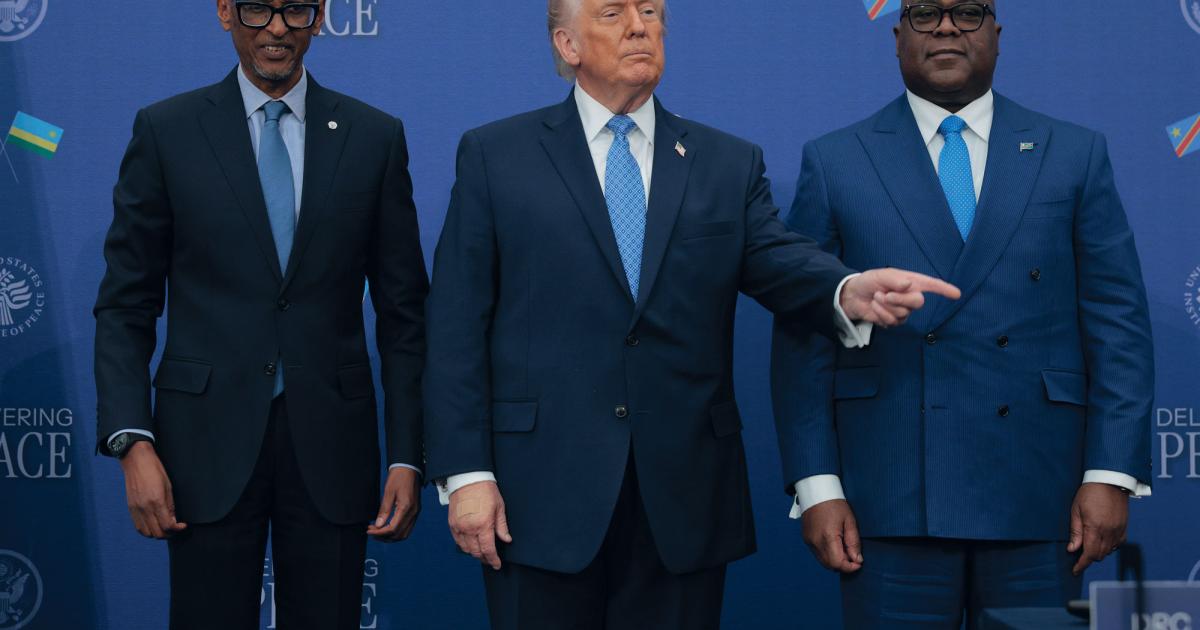
And so despite the decline of Black moderate transnationalism, U.S. Africa policy remains a bargaining process dominated by individuals and interest groups and often delivers uneven outcomes. In a foreign policy space that Washington still considers marginal to its core interests, African elites continue to wield considerable influence over the U.S. government—even the Trump administration, despite claiming to wrest advantageous deals for Americans all over the world. Consider the 2025 “strategic partnership” the United States signed with Congo, which Trump promised would open the country’s vast mineral reserves to American investors while displacing Chinese dominance over essential Congolese resources. Most commentators have portrayed this agreement as one-sided, primarily benefiting the United States.
The number of Black African immigrants in the United States has ballooned.
But this conflates the interests of the Congolese people with those of the Congolese government. Facing growing discontent among his people as he maneuvers to run for a constitutionally prohibited third term, Congolese President Félix Tshisekedi—supported by a high-powered lobbying firm with close ties to the Trump administration—hitched his survival to the United States, successfully bargaining for American assistance to fight Rwandan-backed rebels who had taken control of territory in the east of the country. Tshisekedi also convinced the United States to sanction former Congolese President Joseph Kabila, a key rival, as well as senior Rwandan defense officials for their role in supporting the insurgency. U.S. companies, meanwhile, face considerable logistical and other hurdles to accessing the promised resources, including a complex business environment dominated by Chinese firms.
Adopting a more consistent continental approach that prioritizes democratic values above trade and security interests may not win the short-term battle over resources with China, which is probably already lost. But it could gain the United States meaningful goodwill among Africa’s restive young people, who are increasingly frustrated by the iron grip exerted on their societies by aging autocrats who reap gains from great-power competition.
Barring such a change, the United States’ makeshift Africa policy is unlikely to change in the short term. But in the long run, it may well develop an even more transactional dynamic between Washington and the continent, even after Trump leaves the White House. For despite their paternalism and misplaced support for authoritarianism, the Black moderates whose influence is on the wane often believed they were working in the best interests of the African people. Without their moderating touch or any sort of pan-African consciousness underpinning U.S.–African relationships, African elites are the most likely to benefit, to the detriment of both ordinary Africans and American interests.
Read more A Democracy Safe for the World

Related Posts
A Less-Is-More Strategy for America

The Chokepoint Trap